
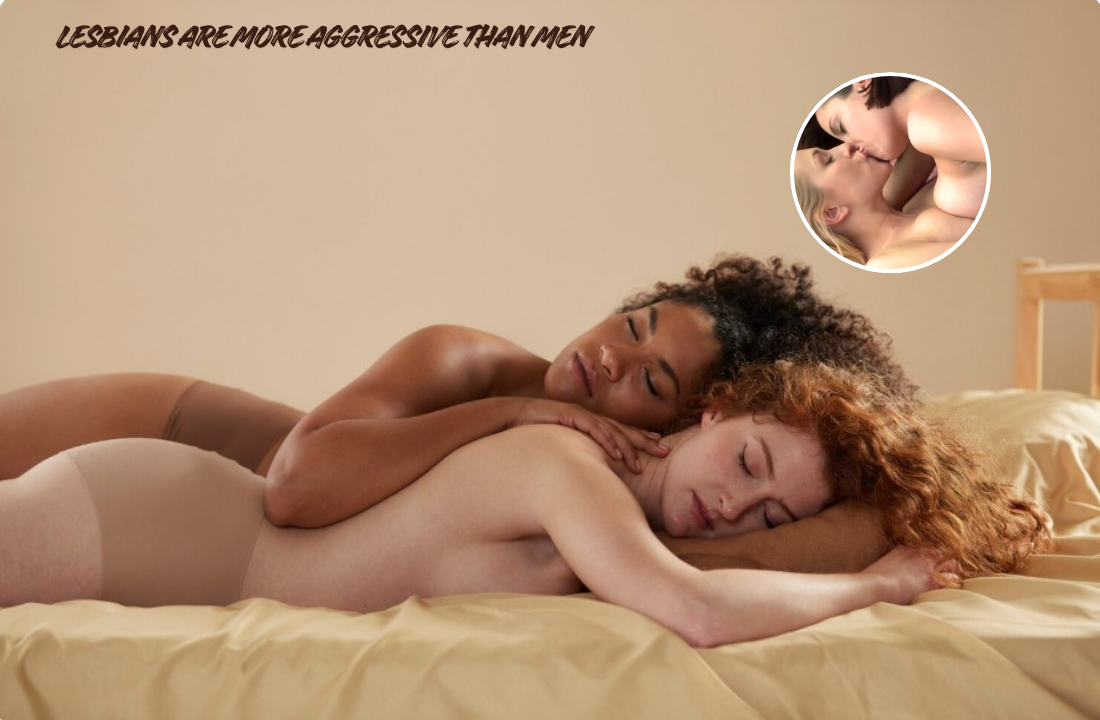
A Dangerous Sentence—and the Intimate Truth It Accidentally Reveals
Let’s be clear from the start:
This title is not a fact.
It’s a trigger.
And triggers don’t exist to tell the truth—they exist to expose where we’re uncomfortable.
So instead of arguing whether the sentence is right or wrong, let’s ask a more interesting question:
- Why does this sentence feel believable to some people?
- Why does it shock others?
- And what does intimacy have to do with all of it?
Welcome to the uncomfortable middle.
The First Mistake: Confusing Aggression With Intention
We live in a culture where:
- Men are expected to initiate intimacy
- Women are expected to receive it
So when two women enter an intimate space and both:
- initiate
- desire
- choose
- act
People don’t know where to file that energy.
It doesn’t fit the old script.
So instead of calling it clarity, mutual hunger, or emotional confidence, society reaches for a word it already fears:
“Aggressive.”
But here’s the truth:
Aggression isn’t about force.
It’s about certainty—and certainty in women makes people nervous.
When No One Is “Supposed” to Lead… Both People Do
In heterosexual intimacy, roles are pre-written:
- One pursues
- One responds
In queer female intimacy?
There is no default leader.
So what happens?
Negotiation.
Eye contact.
Pauses loaded with meaning.
Desire that doesn’t rush but doesn’t retreat either.
That kind of intimacy feels intense because:
- No one is hiding
- No one is playing dumb
- No one is pretending not to want
And intensity, when it comes from women, often gets mislabeled as aggression.
Silence Can Be Louder Than Force
Here’s something people don’t talk about:
A lot of male intimacy is noisy.
A lot of queer female intimacy is quiet—but overwhelming.
Quiet doesn’t mean gentle.
Silence doesn’t mean passive.
It means:
- attention
- emotional presence
- deliberate touch
- intention without performance
To a culture addicted to loud dominance, that kind of focused intimacy feels threatening.
So again, it gets the wrong label.
The Real Crime: Women Wanting Without Apology
Let’s say the quiet part out loud:
Women are allowed to be wanted.
They are not encouraged to want.
Especially not:
- openly
- decisively
- sexually
- without a male audience
So when women desire each other—clearly, confidently, without shame—it disrupts everything.
That disruption doesn’t get called freedom.
It gets called:
- too much
- intimidating
- aggressive
Because desire without apology is dangerous in systems built on control.
Emotional Courage Looks Violent to Emotionally Shallow Cultures
Real intimacy isn’t soft.
It’s risky.
It requires:
- honesty
- vulnerability
- presence
- emotional exposure
Two women being emotionally available with each other—without hiding behind irony, jokes, or detachment—creates a depth many people aren’t trained to handle.
So instead of saying:
“This is intense.”
They say:
“This is aggressive.”
But intensity isn’t violence.
It’s commitment.
The Male Gaze Is Missing—and That’s the Problem
Another uncomfortable truth:
A lot of intimacy narratives exist for men to watch.
When women are intimate without:
- performance
- validation
- explanation
It feels autonomous.
Self-contained.
Complete.
And that completeness gets misread as a threat.
Because it doesn’t ask for permission.
So What Is This Title Really Saying?
Not that lesbians are aggressive.
It’s saying:
- We are uncomfortable with women who initiate
- We are uneasy with intimacy that doesn’t follow scripts
- We don’t know how to process desire that isn’t filtered through men
- We fear emotional honesty more than physical force
So we invent a word to protect ourselves from having to rethink intimacy entirely.
FINAL THOUGHT
The sentence
“LESBIANS ARE MORE AGGRESSIVE THAN MEN”
It isn’t about lesbians.
It’s about a society that:
- mistakes confidence for danger
- mistakes desire for dominance
- mistakes emotional clarity for aggression
What people are really reacting to is not violence.
It’s women who know what they want—and don’t wait to be chosen.
And that, for some reason, still scares the hell out of people.
